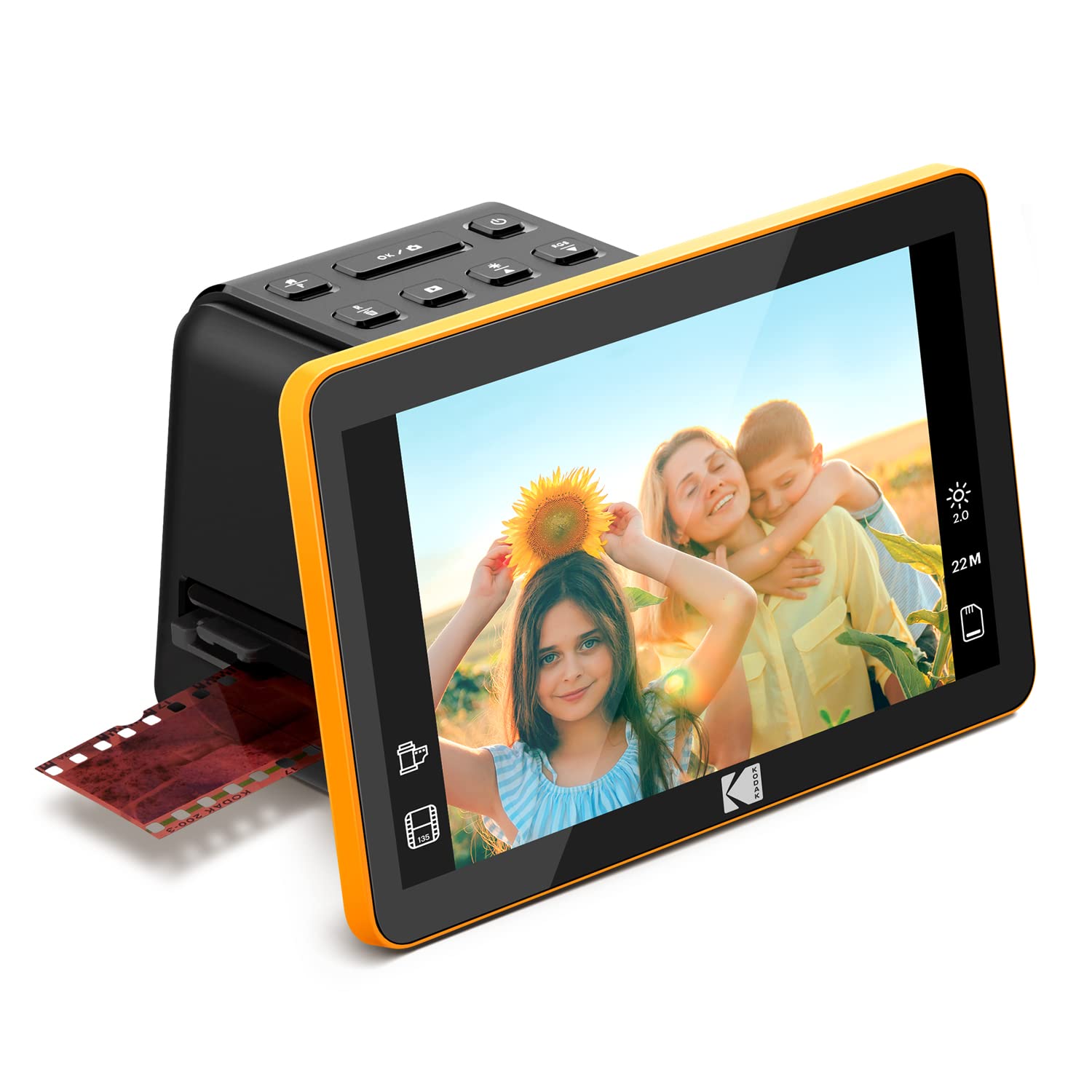
The KODAK Slide N Scan Max is designed to make converting family slides and negatives into digital files a straightforward home project.
This kodak slide n scan max review looks at its format support, direct SD saving, and image adjustments to help you decide whether its convenience matches your archive.
KODAK Slide N Scan Review Summary
The quick verdict
1,000+ ratings
Read Amazon ReviewsKODAK Slide N Scan Max
A practical choice for families digitizing 135, 110, or 126 film who want direct SD saving and simple on-device adjustments.
- Supports 135, 110, and 126 film formats, including slides and color or black-and-white negatives.
- A smooth-moving tray is designed to feed film without constant repositioning.
- Saves scanned files directly to SD or SDHC cards up to 32GB.
- Uses a 13MP CMOS sensor and provides image capture up to 4208 × 3120, with 22MP interpolation.

Pros
- Direct SD-card saving supports a simple, computer-free scanning routine.
- Three film formats cover a useful range of common family negatives and slides.
Consider before buying
- The stated format support is limited to 135, 110, and 126 film, so check your archive before buying if it includes other formats.
- The 22MP figure uses interpolation; buyers focused on native sensor capture should weigh the 13MP CMOS specification.
Read the full review summary
This scanner combines a moving film tray, support for 135, 110, and 126 formats, and direct saving to SD or SDHC cards up to 32GB.
It is meant for people who want to work through a box of older color or black-and-white negatives and slides without making a computer part of every scanning step.
Its 13MP CMOS sensor captures images at up to 4208 × 3120, with 22MP interpolation, and the capture software offers one-touch resizing, conversion, and adjustment.
Those specifications make it a feature-rich option for personal archiving, though buyers should distinguish interpolated output from native sensor capture and consider whether the supported formats cover their collection.
The buying factors
KODAK Slide N Scan Scorecard
Editorial scores reflect listed features and buyer fit; they are not laboratory measurements or customer ratings.
Film format coverage
Handles 135, 110, and 126 film, including slides and color or black-and-white negatives.
Scanning workflow
A moving tray is designed to feed film with less frequent repositioning, and one-touch controls keep routine adjustments accessible.
Standalone saving
Files can be saved directly to SD or SDHC cards up to 32GB, so the workflow does not require a computer for each scan.
Image capture options
The 13MP CMOS sensor supports captures up to 4208 × 3120, with 22MP interpolation; the distinction matters when judging output needs.
Editing simplicity
The capture software offers resizing, conversion, and image adjustment through one-touch operation.
Collection flexibility
The supported formats suit many common family archives, but buyers with other film types should verify compatibility before choosing.
Key Features and Specifications of KODAK Slide N Scan
- Supports 135, 110, and 126 film formats, including slides and color or black-and-white negatives.
- A smooth-moving tray is designed to feed film without constant repositioning.
- Saves scanned files directly to SD or SDHC cards up to 32GB.
- Uses a 13MP CMOS sensor and provides image capture up to 4208 × 3120, with 22MP interpolation.
- Capture software offers one-touch resizing, conversion, and image adjustment.
- USB connection, LED light source, and 24-bit color depth.
- Compact unit measures 6.69 × 5.35 × 4.45 inches and weighs 16 ounces; listed warranty is one year limited.
Pros and Cons of KODAK Slide N Scan
Pros
- Direct SD-card saving supports a simple, computer-free scanning routine.
- Three film formats cover a useful range of common family negatives and slides.
- Moving tray design can make it easier to advance through a group of frames.
- One-touch editing options reduce the need to navigate complex adjustment menus.
Consider before buying
- The stated format support is limited to 135, 110, and 126 film, so check your archive before buying if it includes other formats.
- The 22MP figure uses interpolation; buyers focused on native sensor capture should weigh the 13MP CMOS specification.
- Direct storage requires a compatible SD or SDHC card, and the supported capacity is up to 32GB.
Who Should Buy KODAK Slide N Scan?
Good fit
Consider the Slide N Scan Max if your priority is bringing common family negatives and slides into a digital archive with a relatively simple process.
The combination of a moving tray and direct SD-card saving is useful when you expect to scan many frames and prefer not to manage a computer connection for each one.
It also suits buyers who want modest adjustments as part of capture.
Resizing, conversion, and image adjustment are available through one-touch software, while the CMOS sensor and interpolated output provide a stated resolution ceiling for creating files to view, share, or preserve.
Before choosing it, inventory the formats in your collection and decide how much output detail you need.
Make sure your films fall within the listed 135, 110, and 126 support, and treat the 22MP interpolated figure separately from the 13MP sensor resolution.
Who should skip it
Look elsewhere if your archive depends on film formats beyond 135, 110, and 126; the listed compatibility does not establish support for other types.
This may not be the best fit if your workflow depends on a larger storage card, or if you specifically need a stated native capture resolution above the 13MP sensor specification.
How the KODAK Slide N Scan Max Fits a Home Archive
A tray-based workflow for batches
The smooth-moving tray is intended to feed film without requiring constant repositioning.
For someone digitizing a family collection over several sessions, that design may make advancing from frame to frame feel more continuous, although the quality of the source film and careful handling still shape the result.
Resolution figures need context
The scanner combines a 13MP CMOS sensor with output up to 4208 × 3120 and 22MP interpolation.
Interpolation creates a larger pixel count from the sensor capture; buyers comparing scanners should focus on whether the resulting files suit their viewing, sharing, or printing plans rather than relying on the largest number alone.
Card saving keeps the process self-contained
Saving directly to SD or SDHC cards up to 32GB removes the computer from the immediate scanning loop.
That can simplify a dedicated digitizing session, but it also makes card capacity and transfer to the eventual archive part of the buyer’s workflow.
Check the film before committing
Support for 135, 110, and 126 covers several familiar formats, and the unit is described for both slides and color or black-and-white negatives.
If labels or mounts are unclear, identify a few representative pieces in the collection first so the format coverage is a match for the material you actually plan to scan.
Alternatives to KODAK Slide N Scan
Slide & Negative Scanners alternative
12,000+ ratings
Read Amazon ReviewsKODAK Slide N Scan Film & Slide Scanner
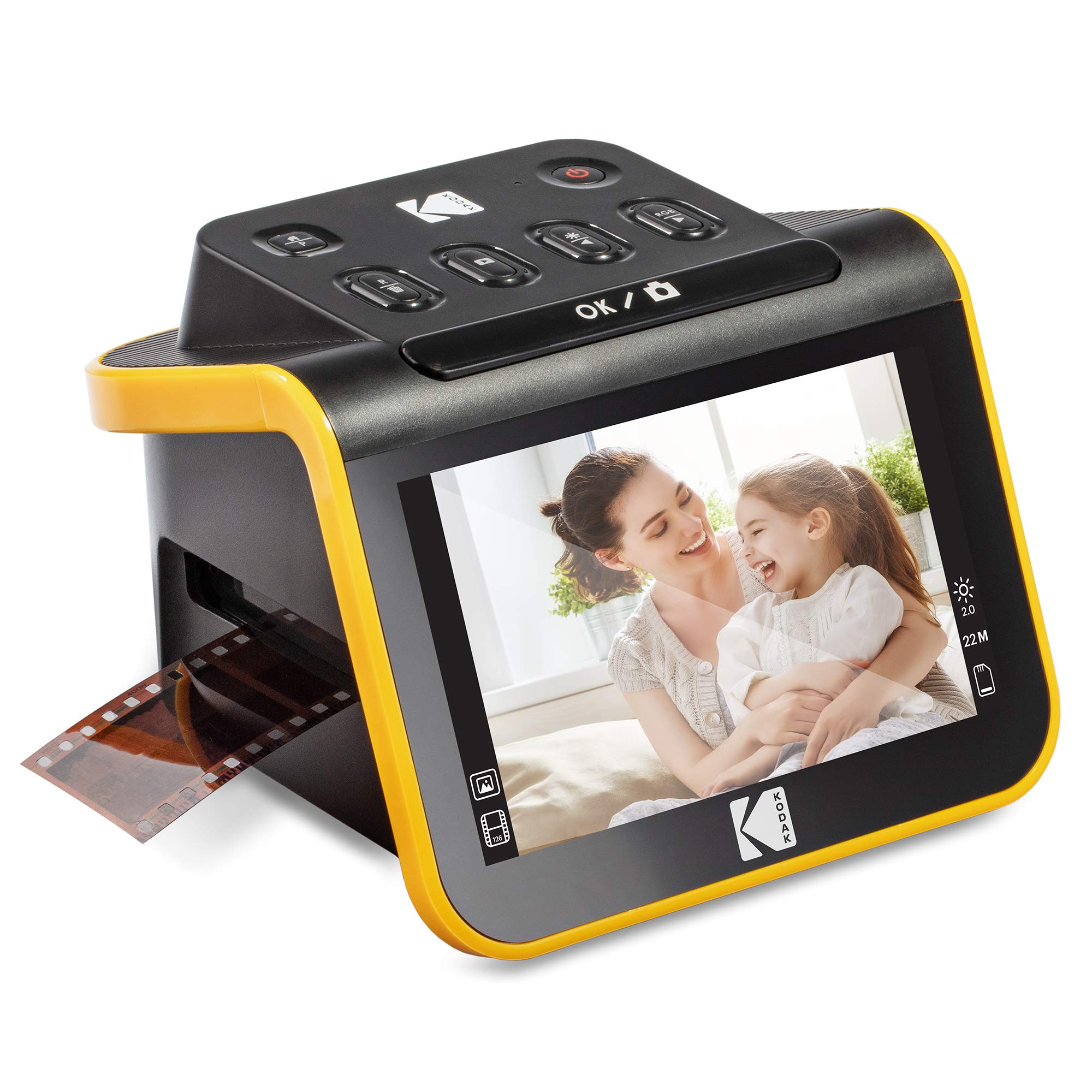
Choose the alternative if a built-in 5-inch preview screen and its included slide holder and adapters are more useful to your workflow.
The Max is a closer fit if you prefer its stated sensor resolution details and are comfortable scanning without relying on a listed LCD.
- This KODAK scanner supports 135, 110, and 126 film and has a 5-inch LCD for previewing and editing.
- It saves to SD or SDHC cards up to 32GB and includes a 50mm slide holder, film adapters, cleaning brush, USB cable, and HDMI cable.
- The Slide N Scan Max supports 135, 110, and 126 film, saves directly to SD or SDHC cards up to 32GB, and uses a 13MP CMOS sensor with 22MP interpolation.
USB charging alternative
100+ ratings
Read Amazon ReviewsHP FilmScan HPFS500
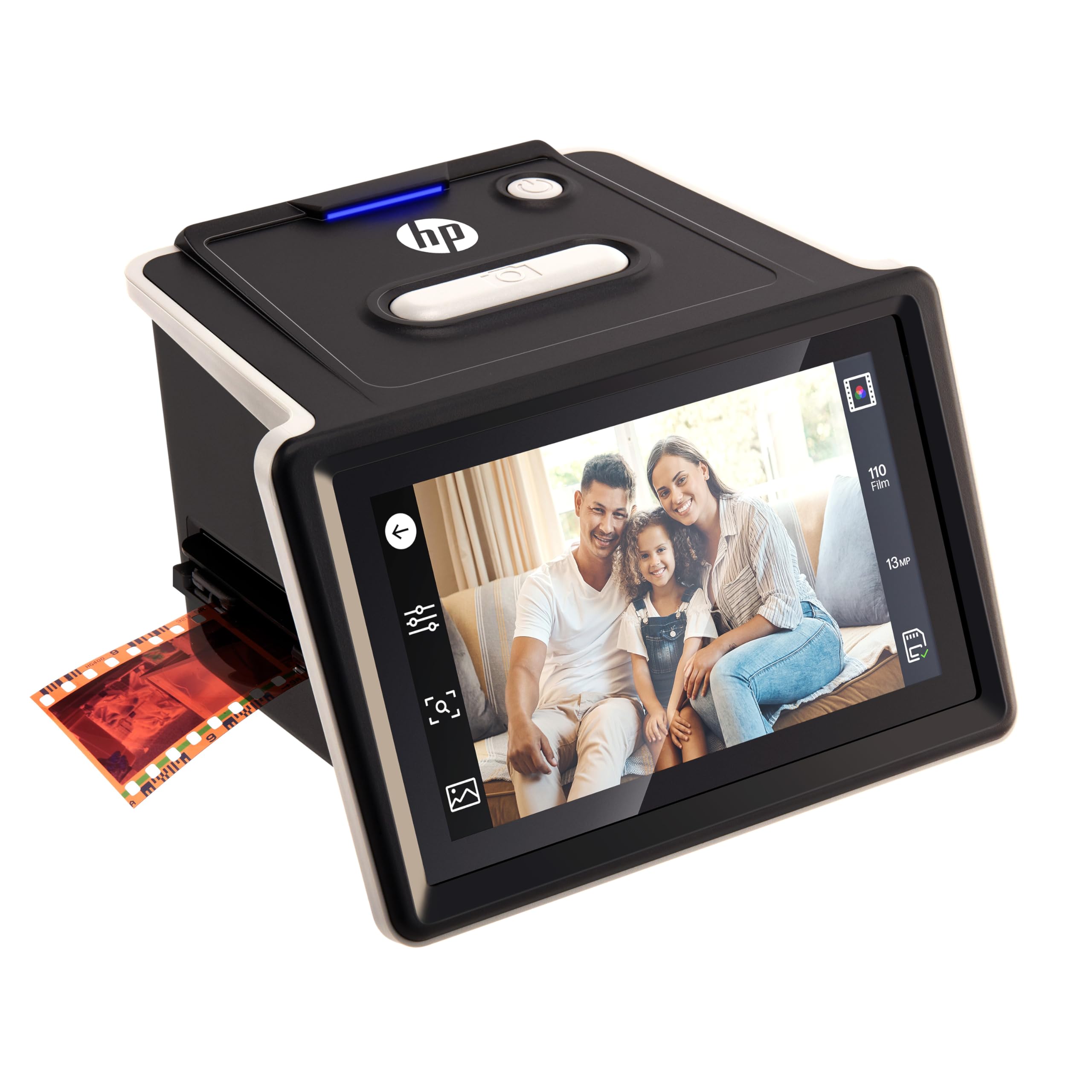
The HP is worth considering if you want a touchscreen preview and editing interface alongside similar listed film-format coverage and sensor figures.
The KODAK Max may suit you better if its moving tray and SD/SDHC support up to 32GB align with your preferred scanning routine.
- The HPFS500 supports 135, 126, and 110 film, uses a 13MP CMOS sensor with 22MP interpolation, and provides a 5-inch touchscreen for previewing and editing.
- It saves directly to an SD card and can be powered through USB-C from a PC USB port or external 5V adapter.
- The KODAK model supports 135, 110, and 126 film, with a moving tray and direct saving to SD or SDHC cards up to 32GB.
Is KODAK Slide N Scan Worth It?
The KODAK Slide N Scan Max is worth considering for a home archive built around 135, 110, or 126 slides and negatives.
Its moving tray, direct SD-card saving, and one-touch editing aim to keep digitizing manageable without requiring a computer at every step.
Buy it if those formats cover your collection and its 13MP sensor with interpolated output matches your expectations.
Check your film types, storage-card needs, and resolution priorities first; those practical details will determine whether its convenience is the right fit.
Your review at a glance
1,000+ ratings
Read Amazon ReviewsKODAK Slide N Scan Max
A practical choice for families digitizing 135, 110, or 126 film who want direct SD saving and simple on-device adjustments.
- Supports 135, 110, and 126 film formats, including slides and color or black-and-white negatives.
- A smooth-moving tray is designed to feed film without constant repositioning.
- Saves scanned files directly to SD or SDHC cards up to 32GB.
- Uses a 13MP CMOS sensor and provides image capture up to 4208 × 3120, with 22MP interpolation.